Ancient logic, modern screens
Modern digital computing—from microchips and binary code to complex algorithms—shares its foundational logic with ancient African knowledge systems created centuries before the Western digital revolution. Explore how cross-cultural innovation shaped the foundations of our digital world.

The Ifá binary system
Centuries before modern computer architecture, the Yoruba people of West Africa formulated an intricate mathematical matrix. Centered on the Opon Ifá divination tray and sacred ikin palm nuts, this methodology uses pairs of marks where single lines (I = 1) and double lines (II = 0) establish computational logic. Rooted in 16 fundamental signs (24) generating 256 distinct outcomes (28), this framework directly mirrors the 8-bit byte that powers the modern digital age.
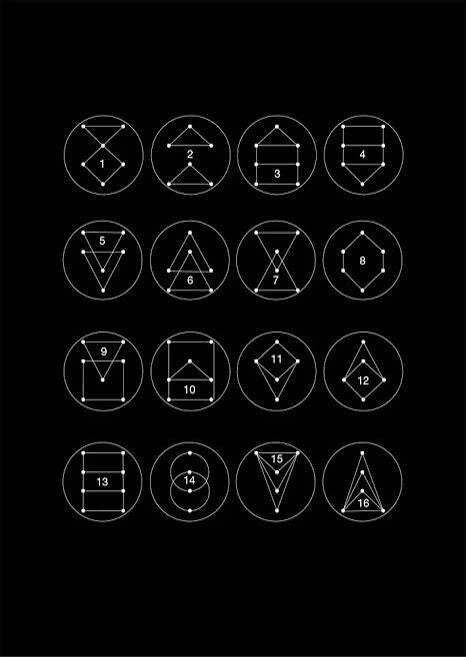
From geomancy to modern silicon
Binary computation is not an exclusively modern invention. The foundational algorithms that dictate today's microprocessors traveled through historical trade routes, translating African binary geomancy into Arabic calculations, medieval European scholarship, and eventually Leibniz's binary mathematics. Every line of code written today echoes an ongoing lineage of cross-cultural innovation, proving that modern tech rests on millennia of global genius.
Explore the digital archives
Historeelz is committed to reconstructing the logic behind the legacy. Continue your journey through our curated Blueprint Collection, investigate deep-dive research across our historical archives, and follow our video series on YouTube, TikTok, and Instagram to explore animated engineering models and visual comparisons that redefine how we see technological history.